"We are what we pretend to be, so we must be careful about what we pretend to be." Kurt Vonnegut. I now pretend to be an author. Let's see how it goes.

27 February 2009

The Master of the Marionettes

It is rather difficult, at times, to be an author. You spend hours, weeks, months, years of your free time with your characters, building them up, giving them goals, and then forcing them to struggle. You purposely place obstacles in their path, usually pulled out of thin air, just to watch them squirm. It is the most terrible form of sadism imaginable. They suffer, for the cruel enjoyment of others. You make these "characters" of yours, who are often so much more real than "real" people, dance. You twirl them around by the cross. They are simple marionettes who must live and die by the whim of their puppet-master. 

Oh God, it is a difficult thing to kill any character, but especially the protagonist of your first novel. And see, today is the 27th day of February. I wrote, on the 24th albeit, for Mark to be shot and killed on the 27th of 2007. I have had a terrible time of it these last two years, coping with the horror of creating a character whom you love but must kill for literature's sake. I killed Mark two years ago; I was the panther in the ski mask who shot him and watched him fold like a house of cards. It is my fault entirely, all of it. I was coping the best I could and had Ralph cope the same way. In my sleep I saw him. I dreamt of him. I made myself believe that he was not really gone, even in death. Yet, four nights ago, Mark told Ralph adieu--told him that it was time to move on. I wrote those words much more calmly than I expected. The tears were minimal. But now, oh God, now! I don't feel ready to let go. I looked up at the sky as I got out of the car tonight and saw Orion. I instantly thought of Mark--instantly thought that I cannot bear this.

I don't know where I can go from here. I tried to start the Epilogue tonight, but for God's sake, I cannot write about Henry Erikson right now. It was hard enough to write about Ralph, who was at least a somewhat honorable man with the best of intentions. Furthermore, I could still write good things about Mark. Now, I will have to cut all ties to the first two books and deprecate that which I had previously championed. I don't know how to do these things, how to turn evil to good and good to evil. I am not sure I even want to.

Yet, the first thing I have to do is come to terms with what I have written. Mark Adams died two years ago today. He is gone, and nothing can be done.

24 February 2009

Book Stats: February the 24th, 2009

Pages: 200. Words: 57,986. Chapters: 5. Prologue? Yes, and it is damn good.. Epilogue? Last thing to do. Favorite Passage: Everything Mark says in Chapter 7: "Check Your Premises".

I am rather too excited to sleep. I might see if I can crank out the epilogue tonight. Or maybe not. Either way, I find it amusing that I wrote four chapters in less than a week with school. I feel so... on top of the world right now. And Matt Nathanson's song "To the Beat of Our Noisy Hearts" is really getting my blood moving tonight. Also, should I point out that I only got one hour of sleep last night and have had at least three or four caffeinated drinks?

Look at what my horoscope for today says: "Your communicative abilities are accented. This is an excellent time to sway others to your cause through speeches or clever arguments--your thinking is most lucid and grasping. Your energy is high and your creative juices are successfully being applied to whatever needs accomplishing. You will enjoy considerable success at this time. You feel vital; you feel good; you feel in harmony with yourself; the entire world, and everybody in it" (Pisces).

Part One: Cosmos
I. The Last Honest Man in Washington
II. Handkerchiefs and Hardships
III. The Silent Scream
IV. Lost Causes
V. The Human Bomb
Part Two: Chaos
VI. A Mouse in the Perfect Trap
VII. Check Your Premises
VIII. For How Life Should Be
IX. To Jump Off a Cliff
X. Forgiveness at Gunpoint
XI. No Way Out
XII. The Truth About Hope

Progress Update: The Truth About Hope

By God! Is this even possible! I think I have just finished my second novel, for an Epilogue is not really part of the novel itself. Words cannot express the feeling in my heart, for I had forgotten in two years what if was to feel like this. The Calmness of Martyrs is, with the exception of the Epilogue, done. I have written two novels. That bears repeating: I have written two complete novels. I am giddy. I cannot recall the last time I was this happy. I even finished it on the 24th, as I had planned, and not the 25th. What's more, it ends on a somewhat happy note, or at least, if not happy, bittersweet, perhaps.

So this last chapter, Chapter 12 is "The Truth About Hope" and has 14 pages and 4500 words. It is going to need some editing because I am not sure I like how it flows, but by God! I am done with my second novel! There is no getting over this!

Progress Update: No Way Out

Partially because of time, yes, but also because I honestly had no idea how to write three full chapters after Jane's death, I decided that this book will only have 12 chapters. Chapter 11 is now complete. It is called "No Way Out" and has 4300 words and 14 pages. Yes, that is a little short, but the chapter only needed to do three things, and they all flowed together relatively quickly.

Essentially, I did something in this chapter that I should have done a long time ago, not just for Ralph, but for me as well. Now it is done, and yes, it is killing me, having done it. Anyhow, today is the day. One more chapter plus epilogue.

23 February 2009

Progress Update: Forgiveness at Gunpoint

Again, I find myself behind what I said I was going to do. Oh Well. Chapter 10 is done. Finally. It was rather difficult to write. It is called "Forgiveness at Gunpoint" and has 15 full pages of 4600 words. Unfortunately, I cannot possibly bring myself to post an excerpt. It is still too close to the heart. I had to do something very horrible to a character whom I love. I... Oh, I can't even say. It's terrible of me to feel so badly about what I write. It isn't like it's real to anyone other than myself, and caring this much only causes problems. I do not see the benefits. I feel their pain, yes, but by God, why should they always have to feel pain? Oh, I cannot say.

I think I shall at least start Chapter 11 now.

19 February 2009

Progress Update: To Jump Off a Cliff

As usual, I finished Chapter 9 a full day later than intended; however, it started out rather rough. I was not terribly happy with last night's half, and tonight's started poorly. I think, however, that I managed to get back into the groove of writing Mark. I hadn't done it in so long... but I think I remember. He lectures Ralph on time. It is quite charming, really. Excerpt below.

Anyhow, the chapter is 4700 words and 15 pages. Again, my consistency is rather frightening.

In terms of all else, I am tired. It is not even 2 am, and I am damn tired. I have to have another chapter done by tomorrow night. This could potentially go very, very badly...

“Now, Ralph,” he continued, “now we can talk about consequences—about time, whatever that is.” He paused to catch the wording. “You see, Ralph, time is at the center of all of this. Is this a defining moment in your life, or is it simply fleeting? Is every moment fleeting? Is every moment defining? Are these terms mutually exclusive? Do they have any meaning at all? These, Ralph, are the questions you must ask, for the best course depends on their answers. By my estimation, you have three options. The first model is globular. You can view time as a jumble of disconnected events, each independent of the others. In this view, nothing matters, and thus, you can do anything. You can stay or not stay in San Francisco and it will make no difference. In this view, life is wholly devoid of meaning, and each attempt to inject it with meaning is futile in the great cosmic scheme. That is the first option.

“The second model is circular. Realists and cynics alike champion this view, for they see time as one great circle, rotating around on itself. They view time as cyclical. Oh, it is a pretty model, yes, in which past, present, and future are intrinsically connected. In fact, there is very little difference between the three. Nothing ever changes for long. Time is fundamentally stagnant. This is very much the fatalist’s view, for things remain as they have always been, and will never change. For better or for worse, there is no progress. Problems remain unsolved. There is nothing that can be done but accept the circle and let the current of the whirlpool pull you along. If time is circular, then you are in San Francisco because I went to San Francisco. Everyone that you have ever been remotely close to has been wronged by Fate, for lack of a better word. Your father was the victim of doctors’ incompetence. I was assassinated right before your eyes. Now, your wife has been kidnapped by terrorists. Everyone around you has played the martyr. You expect it and view that as reality. Now, if you follow this model, you think that it is your turn to play the martyr, because that is what people do. If you follow this model, you will stay in San Francisco. That is the second option.

            “The third model is linear. This is how idealists view the world—as a chain of events that be connected through logic and reason—a series of events that is not stagnant but progressive by nature. An idealist realizes that the world does not always change for the better, but it does change. Idealists have faith in people and believe that people learn. They rise up and do what they believe to be right. When they realize that something is wrong, that something could be a miserable endless cycle, they break it. Idealists move us forward toward utopia. The past exists only as a guide, and the present is merely the bridge to the future. Those who believe in linear time see the world as it should be and fight to accomplish that goal. Fate determines nothing; the human spirit determines everything. Now, if you accept this model of time, you came to San Francisco to break the bond between Robert Davidson and the Red National Army. According to this model, you are reacting to what has happened to Jane, and you will turn the negative into a positive. You will break the link and, if such a thing is possible, use this situation to solidify public opinion against these Western rebels. I cannot say for certain if that means leaving San Francisco now. I tend to believe it does; however, it is not central to the third model. Regardless, that is the third option.”

            Mark took a deep breath after so many words. “That is the choice, Ralph. Decide how you view time, and every other decision will fall into place.”

16 February 2009

The Best Laid Plans Would Oft Go Awry...

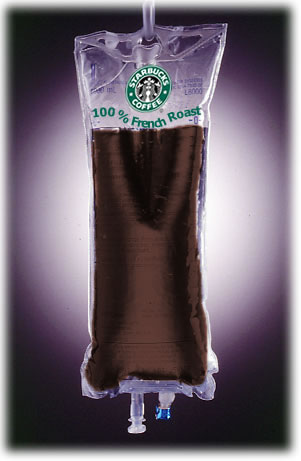
...if it were not for coffee. See, I now have laid my plan to accomplish my long-standing goal of finishing the Calmness of Martyrs on February 24, exactly two years after I finished the Fallen Caryatid. It feels so very round. I have laid out when each chapter must be complete, and I am surely going to kill myself. Coffee is my only chance for survival. See plan below, and hope that I am alive eight days from now.

Tuesday 2/17 Ch. 9
Wednesday 2/18
Thursday 2/19 Ch. 10
Friday 2/20 Ch. 11
Saturday 2/21 Ch. 12
Sunday 2/22
Monday 2/23 Ch.13
Tuesday 2/24 Epilogue

15 February 2009

Softly, Softly, to Catch a Monkey

Well. It has been a while since I finished a chapter. Chapter 8 has 15 pages and 4500 words. There isn't all that much to say about it. Lots of flashback and dialogue, as usual. It doesn't feel all that special. A few good lines. That's about it. It is called "For How Life Should Be." Here is an interesting little excerpt.
“Why,” the grin pulsed like the pain of a migraine in strobe lights, “that was exactly the attitude of the late Mr. Adams—he put that belief into practice. You adopted it and have continued to enforce it. You now naively ask me to the same.” The blood vessels screamed in agony as they dilated. “California seceded because we do not entertain such thoughts. Terrorist groups have the right to—” 
“Damn it, Davidson! Listen to yourself!” The vessels burst, and suddenly Ralph’s voice broke with sadness. “Look around you. San Francisco has been reduced to this,” his hand trembled as he borrowed a Davidsonian gesture, “because of a terrorist attack. How can you possibly say that they have the right to level a city, to wreak such hell upon a country?” 
“How can you say that they haven’t such a right?” 
Ralph thought briefly of how Mark would answer such a question. He would say that one’s rights must not come at the expense of others’ basic rights to life, liberty, and property; he would say that one’s rights must not come at the expense of others’ basic rights to life, liberty, and property; he would say that, though might does often make right, rights are always right; he would say that terror and fear should not have to be endured by a people. The disjointed thoughts rolled around his hollow skull. But what would he say? He, Ralph, did not follow thoughts to their logical conclusions. He did not think linearly, not did he think that right and wrong followed logic per se. There was right, and there was wrong, plain and simple, clear as night and day. His thoughts were scattered and wild, his judgment seemingly arbitrary. Even the order that he had once believed to rule the cosmos had been arbitrary and black and white. His philosophy of chaos, too was just as clear cut. What would he now say to such a question? He would not follow the path of logic. He would say, in a faint echo of despair, “Murder isn’t right.”
“And you are just as entitled to that belief as murderers are to their creed."

13 February 2009

What This Cruel War is Over

"Both parties deprecated war; but one of them would make war rather than let the nation survive; and the other would accept war rather than let it perish. And the war came." Abraham Lincoln

Is this not what the secession of the Western States is all about? Is Ralph's insistance on keeping up the fight really about Mark from my perspective, or is it about the states. I almost don't know anymore. All I know is this: in spite of my libertarian teachings that revolution is justifiable when elections cease to be fair and what not, I cannot bring myself to believe that the South had just cause for seceding from the Union. Who says the election was not fair? Seems fair enough to me. So what if Lincoln won without a single electoral vote from the South. Some elections are horrible, plain and simple. That is not an excuse to throw away everything for which a nation has worked for so long. There is so much more that binds us: our common beliefs and hopes and dreams. We Americans have ideals, had them before anyone else dared to think them more than the stuff of fairy-tales.We have ideals, and they're worth fighting for.

It seems fitting to speak of these things tonight, in celebration of 200 years of Abraham Lincoln (and Charles Darwin). I am writing as much as I can and am almost done with Chapter 8, but I am so damn tired. I have had the worst week I can remember. It is all I can do to shut my eyes and think of Mark, Ralph, America, Liberty, Truth, Justice, Right, Reason, Sanity... everything which I hold to be numinous in the universe. These things get me through the day, the week, the torrid quotidienne. They get me thinking about the questions without answers, and not just the purely philosophical ones. I wonder what this cruel war is over. The real Civil War? The one in my novels? The one between my body, mind, and soul? Oh, God, what fission of the soul I feel tonight!

03 February 2009

Political Surrealism and How Things Should Be

I have decided that I can no longer stand staring at would-be Mark's face every time I view this blog. I swear it's killing me. I need something different, something new and entirely unlike Mark Adams. Thus, a Rene Magritte painting will do.

Anyhow, I have realized of late that I write political surrealism (as opposed to magical realism or some silly such thing.) The political aspect should be fairly obvious; I write about politics, Presidential politics, to be exact. As far as surrealism is concerned, however, that is a little more difficult. I don't mean the historical definition per se, for I am only an erstwhile anarchist and most certainly nothing of a communist. By the term, I simply mean that in my novels, things are not as they are in real life, especially politics. Nothing is as it truly is but how it should be. I walk around each day with such grandiose views of what the world is supposed to be like, and all people ever say to me is, "That's not how thing work" or "Life's not fair". I've always wanted to answer them with this: "But if that's how it should be, why isn't it? Why can't we make it that way? Why can't we make things as they should be?" Because that is the world in which I want to live--the world of my ideals. It is the world in which I choose to live, for it is the only world worth living in.

Literature is a wondrous tool that can serve so many purposes. It can be a lens through which to see the world, or part of it. It can be a warning of horrors to come. It can be an escape into that borderland between sanity and insanity. Yet I have no desire to write about things as they are or as they will never be. Those are two extremes that hold very little meaning for me. The only method for which I care is the third extreme and that is writing about things as they should be, regardless of whether or not they can ever be that way. I suppose this sort of writing gives me the hope that President Barack Obama can't. Because contrary to popular belief, I am not really a cynic at all. I am an idealist, and I do choose belief over doubt rather too often. I simply give myself that hope, and then throw myself back into depression when I realize that my books are only fiction.
He tortured himself by thinking when he knew he did not want to think. He thought simply because he thought thinking was the right thing to do. He tuned out his subconscious, who told him to shut up the weary thoughts and shove the boxes in some dark, dank corner of the attic that was his mind. Yet because he thought it was right, he rummaged through the boxes, making nothing but a mess. But he did not look terribly hard because, in spire of what his conscious mind said was right, his subconscious had some impact. Ralph wasn't really looking for the answers--wasn't really looking to see his sorry self reflected upon the mirror of his soul. He, like all mankind, was simply looking for a way to get through the pain of the moment and on to the next. He was living, just living as long as he had to.